
Global Feng Shui Association Calls for Deeper Trust and Clearer Professional Standards
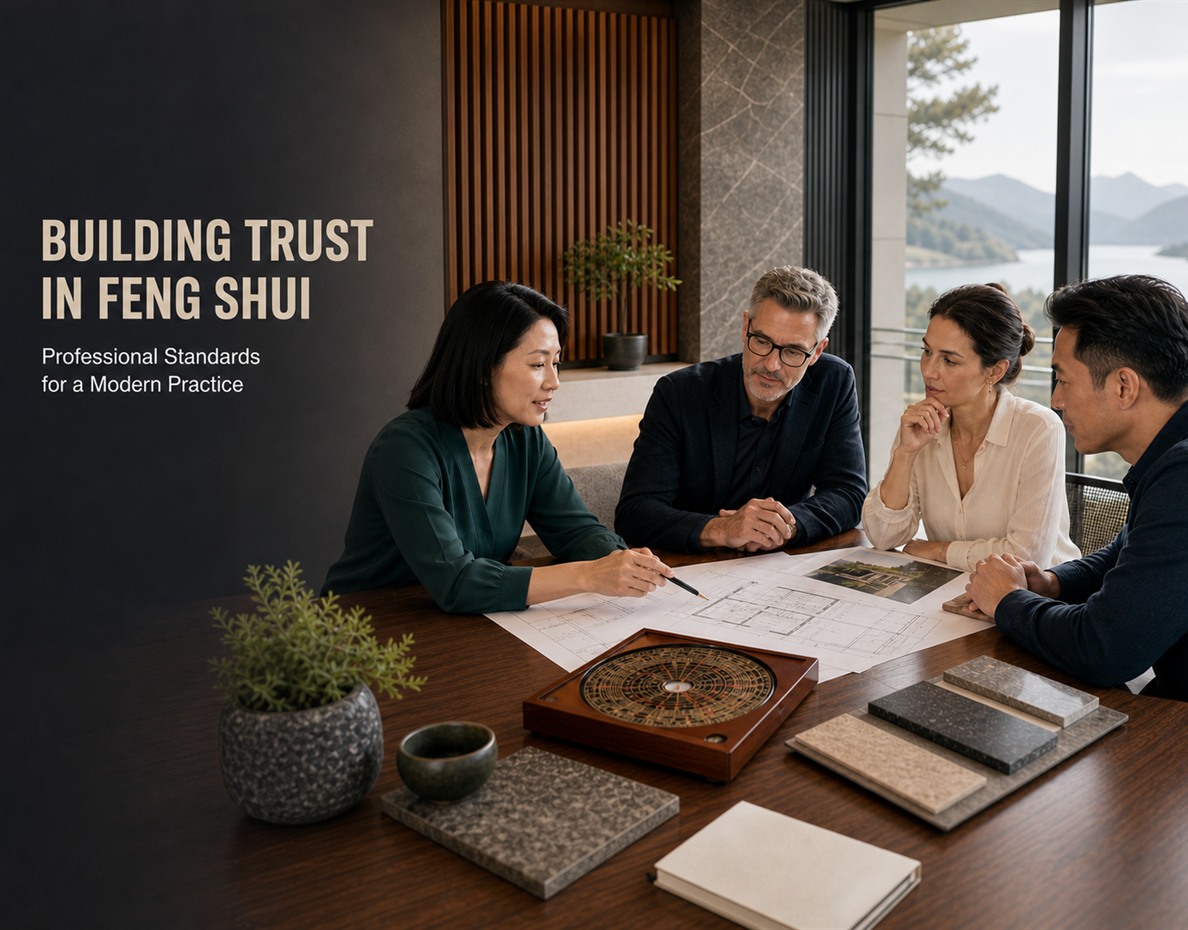
The Global Feng Shui Association has released a new industry feature examining how an ancient practice can meet the ethical and professional expectations of a modern, multicultural world. Its central message is direct: feng shui does not need louder claims; it needs deeper trust.
Feng shui began in a world where choosing land meant paying close attention to mountains, water, wind, sunlight, seasons and safety. Over centuries, distinct lineages and methods developed, each shaped by particular teachers, communities and ways of seeing. Today, practitioners work in apartment towers, suburban homes, retail spaces, clinics, hotels and digital offices. Their clients may understand feng shui as family tradition, spiritual practice, design language or simply a way to make a space calmer and easier to use.
Standards do not require every school to agree
The Association’s feature makes an important distinction: professional standards are not a campaign to impose one lineage, method or interpretation on the entire field. Feng shui has never spoken with only one voice, and honest disagreement can strengthen a living tradition. What practitioners can share, however, is a basic standard for how they treat people who place trust in them.
That standard rules out fear-based selling. Statements that predict illness, family suffering or financial disaster unless a client purchases a remedy exploit vulnerability rather than provide guidance. A responsible practitioner can identify concerns without turning them into threats, explain the basis of a recommendation and distinguish traditional theory from direct observation and professional judgement.
The same discipline applies to promises and scope of practice. No consultation can guarantee a marriage, promotion, pregnancy, cure or financial return. Feng shui may contribute to conversations about comfort, attention, privacy, movement, mood, symbolism and the experience of place, but it must not replace medical care, legal advice, financial planning, structural engineering or mental-health support. Knowing when to refer a client to another qualified professional is a sign of maturity, not weakness.
Consent and confidentiality belong at the centre of practice
Modern consultations often bring practitioners into deeply private settings. Family photographs, religious objects, medication, financial papers, children’s rooms and signs of personal conflict may all be visible. A floor plan is more than a technical diagram; it can be a map of someone’s private life.
The Association therefore encourages clear, informed consent before photographs are taken, measurements are stored, cases are shared with students, or before-and-after stories are published. Clients should understand what information will be used, where it may appear and how identifying details will be protected. Confidentiality is not an optional courtesy. It is part of the trust a practitioner is engaged to hold.
Professional feng shui must be culturally and religiously literate
Practising across cultures also requires humility. Christian, Muslim, Jewish, Hindu, secular and Indigenous clients may each understand sacred space, imagery, ritual and personal boundaries differently. Good practice begins with questions: What is meaningful to the client? What would feel uncomfortable? Are there objects, practices or rooms that require particular care?
Feng shui should meet clients where they are. It should never ask them to compromise their conscience in order to accept a recommendation. This approach does not dilute tradition; it allows practitioners to serve real people with greater precision and respect.
Documenting methods and learning from difficult cases
Professional practice also asks for more than confident conclusions. Practitioners should be able to document what they observed, which method they used, what assumptions they made and why a particular change was recommended. Safety issues should be separated from symbolic preferences, uncertainty should be acknowledged, and cases should be revisited after clients have lived with the changes.
A credible profession cannot learn only from its success stories. When a consultation does not work as expected, the field benefits from asking why. Was the reading incomplete? Did the recommendation overlook cost, family dynamics or the realities of daily use? Did the client understand the advice differently from the way it was intended? Respectful case review—without humiliation—turns individual experience into shared professional knowledge.
The role of a credible professional association
A professional association can provide a shared table rather than a single throne. Its role is not to declare one master or lineage superior, but to make ethical expectations visible, support fair complaint processes, encourage transparent fees, clarify what credentials actually represent and provide meaningful continuing education.
It can also help practitioners communicate with architects, designers, planners, researchers and other professionals without overstating claims. When something can be measured, it should be measured. When an idea belongs to tradition, symbolism or lived experience, it should be described honestly in those terms. Clear language builds more credibility than borrowed scientific certainty.
A responsible future is built through everyday practice
The quiet test of a professional consultation is what happens after the practitioner leaves. Does the client feel more capable of living in the space, or more dependent on the consultant? The strongest consultations help people notice their environment, make thoughtful choices and take ownership of what happens next.
The Association’s call to action is therefore practical. Practitioners can review their scope of practice, consent forms, privacy policies and the language they use to describe risk. They can discuss difficult cases with trusted colleagues, pursue continuing education and remove phrases that create fear instead of clarity. Small changes become habits; habits become culture; and culture becomes the reputation of a profession.
The Global Feng Shui Association will continue to support industry dialogue on ethics, training, case review, cross-cultural practice and public education. By protecting lineage without using secrecy as a sales tool—and by honouring tradition without manufacturing fear—the profession can build a future grounded in skill, humility and trust.